Description
The establishment of the St. Stephen Hungarian Parish in Los Angeles was a significant milestone for the Hungarian Catholic diaspora in the United States. Its founding was primarily due to the initiative of Sister Frederika Horváth, who had moved to Los Angeles for health reasons and, in 1926, gathered her Hungarian brothers and sisters for communal prayer and singing in one of the cathedral’s halls. The first community operated under the name Society of the Sacred Heart of Jesus. The organization was further strengthened by the spiritual retreat led by Fr. Gáspár Lischerong, SJ, during his journey to the Chinese mission, which awakened in the local Hungarians the desire to establish an independent Hungarian parish. Father Ferenc Woodcutter, a priest who had come from the Canadian prairies and occasionally celebrated Mass for them, played an important role in the life of the community. Following the mission of Father Jakab Raile, S.J., the St. Stephen’s Sick Relief Society was also established, which regarded the creation of a Hungarian parish as one of its main goals.
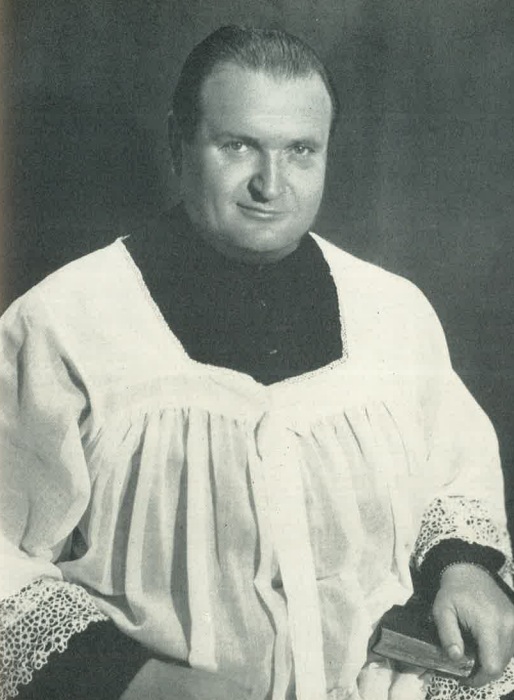
At the society’s recommendation, Bishop Cantwell invited Father Mátyás Láni, who was serving in Bridgeport, Connecticut, and who arrived in Los Angeles in 1928 and organized the St. Stephen Hungarian Parish. The first Masses were held in a Polish church. Father Láni began teaching religion to Hungarian children and organizing summer school, first at St. Bridget’s, then at Holy Cross and Our Lady of Sorrows churches. Due to his outstanding musical talent, he became a music instructor and later the choir director at the Los Angeles Cathedral; he held the former position for twenty-six years and the latter for twelve.
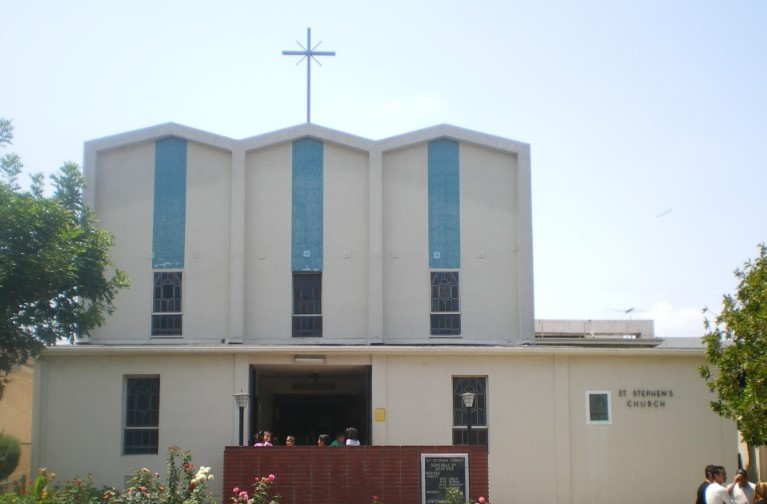
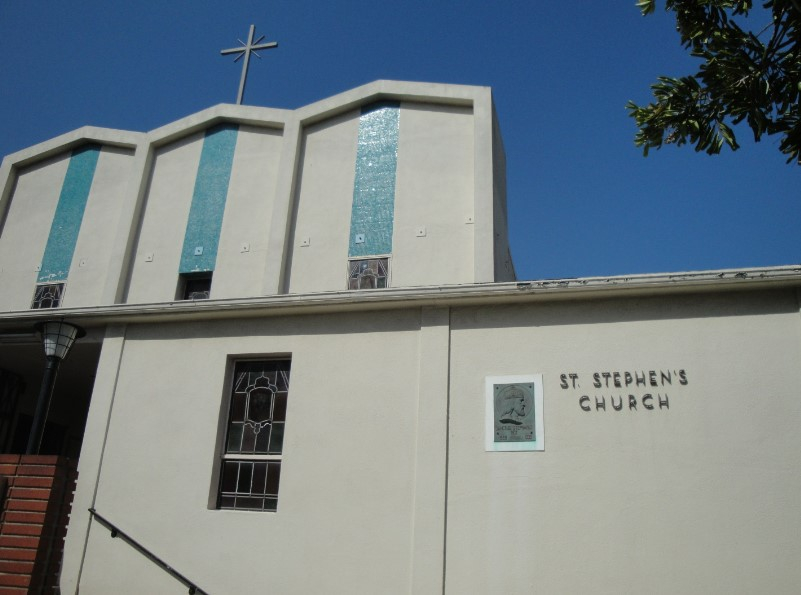
In 1930, the parish purchased the lot at the corner of Woodlawn Avenue and 37th Street, where a church, rectory, and hall were built in a short time. The church was consecrated that same year. In addition to Hungarian parishioners, German Catholics from the Banat region and Spanish-speaking parishioners also attended the parish. The Knights of Columbus donated an organ, and ladies from Budapest sent a Marian banner for the church. The hall soon became a center of Hungarian cultural life: young people performed plays and operettas, held retreats, and numerous Hungarian church figures visited here. In 1933, Fr. Kornél Bőle, OP, and Fr. Bertalan Badalik, OP, led a retreat, and in 1937, Bishop Lajos Shvoy of Székesfehérvár visited the community during preparations for the 1938 Eucharistic World Congress in Budapest.
During World War II, the parish became an important relief center. In 1944, the American Hungarian Relief Action was established here, which sent nearly a quarter of a million dollars in funds and relief shipments to Hungary. The parish later played a significant role in supporting refugees and new immigrants; by 1953, some four hundred Hungarian Catholic families had settled in Los Angeles.
Mátyás Láni was assisted in his work by several priests, including Fr. István Gerencsér, SchP, Fr. Armaredo Salazar, and Fr. Dr. József Nagy. Sunday Masses were celebrated in Hungarian, English, German, and Spanish. Father Láni passed away in 1954, after twenty-six years of service in Los Angeles. For thirteen years following his death, the parish was led by English-speaking pastors, including Msgr. Edward Wade, Fr. Arnold Biedermann, and Fr. Boniface Slawik, while Hungarian pastoral care was provided by Hungarian assistant priests. After the 1956 Hungarian Revolution, the parishioners provided significant assistance to refugees arriving in America.
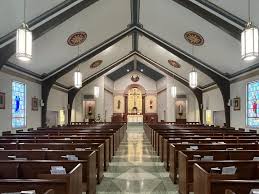
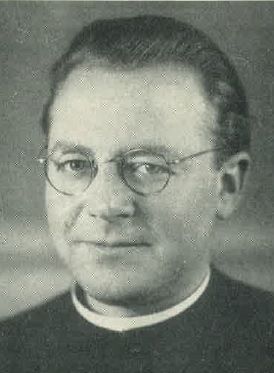
In 1967, a Hungarian pastor once again took the helm of the parish in the person of Fr. Benedek Horváth, OPraem. The parish was entrusted to the care of the Premonstratensian community in Santa Ana. Father Horváth initiated significant liturgical and infrastructural renewal: he modernized the church, had air conditioning installed, and improved religious education, liturgical life, and the functioning of parish organizations. An artistic replica of the Holy Crown, created by goldsmith István Molnár, was placed before the altar; new lighting, stained-glass windows, and a pipe organ enriched the church; and a bronze relief of King Saint Stephen, the work of Ferenc Olgyai-Páll, was also completed.
A rich community life flourished around the parish. The Holy Name Society, the St. Stephen Association, the Women’s Association, the choir, the altar server groups, and the Scouting movement were all active. Regular cultural events were held in the ceremonial hall, including evenings dedicated to László Mécs, István Fekete, and Mindszenty, as well as performances by Hungarian artists and public figures. In 1974, Cardinal József Mindszenty also visited the parish, and in 1989, Cardinal László Paskai paid a visit to Los Angeles.
Hungarian education and the preservation of traditions also played an important role. The St. Stephen Hungarian School was founded in 1969; the Saturday school enrolled about a hundred students, while the Scouting and Regös groups served to foster Hungarian identity. The Hungarian Engineers’ Circle of Friends and the Hungarian Warriors’ Comradeship were also affiliated with the community.
In 1990, Fr. Benedek Horváth retired, and his successor was the American-born, German-descended Fr. József Hermann Rettig, OPraem, who mastered Hungarian and continued the four-language pastoral ministry. Bishop Attila Miklósházy also visited the parish on several occasions.
Hungarian women’s religious communities were also part of Hungarian Catholic life in Los Angeles. In addition to the local house of the Sisters of Charity, the center of the Sisters Devoted to the Sacred Heart—founded by Sister Ida Péterffy, originally from Košice—also operated here, focusing primarily on religious education and youth ministry. In addition, the work of Sisters Izabella and Edit Piczek, known for their religious stained-glass and mural paintings, was a significant artistic contribution.
The St. Stephen Hungarian Parish became one of the most important West Coast centers of the 20th-century American Hungarian Catholic diaspora, playing not only a religious but also a cultural, educational, and community-building role in the life of the Hungarian community in Los Angeles.